What is Aji Amarillo Pepper?
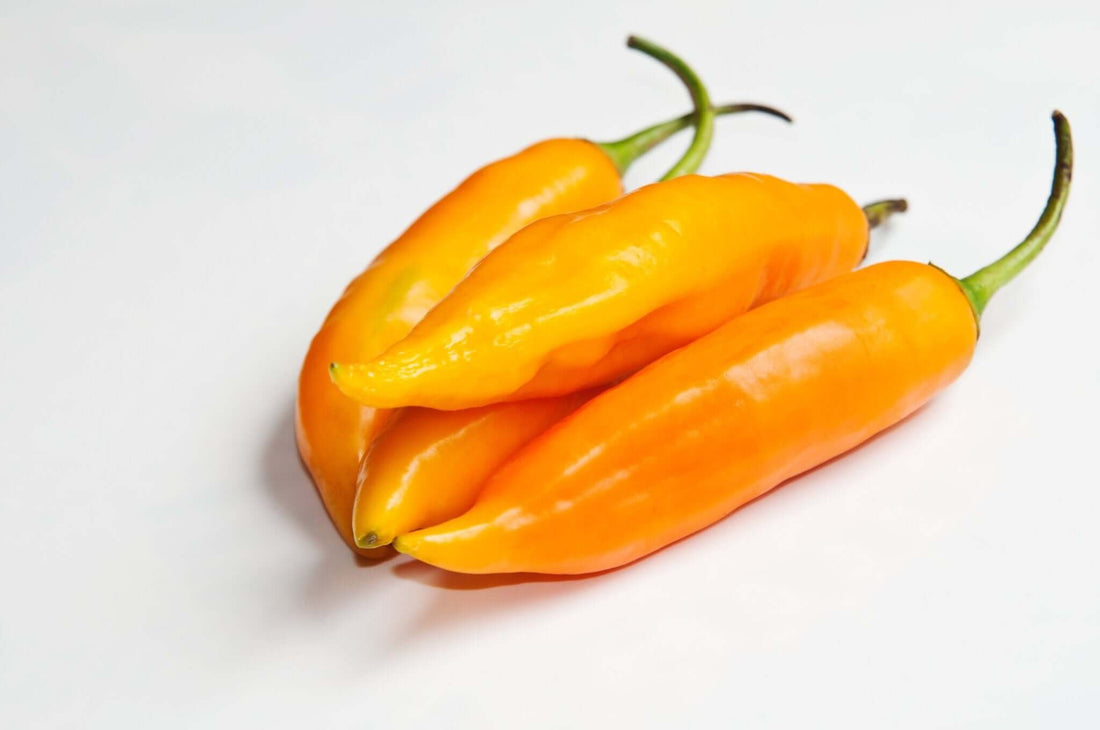
Aji Amarillo is the chile most strongly associated with Peruvian cooking. It brings fruity flavor, a warm golden color and noticeable heat to potato sauces, rice, chicken, seafood and stews. “Amarillo” means yellow, though ripe fresh peppers look orange. In a home kitchen, the most important choice is the form: fresh pepper, whole dried pepper, powder or prepared paste.
Shop Aji Amarillo
Ground Aji Amarillo measures straight into sauces, soups and rubs. Whole dried peppers are for soaking and blending into a smooth homemade paste.
Where Aji Amarillo comes from
Aji Amarillo (Capsicum baccatum) has been grown in the Andes for thousands of years and is still one of the most widely used peppers in Peru, along with aji panca and rocoto. Peruvian cooks often say a dish isn't truly Peruvian without it. The fresh pepper is long and tapered, about 4 to 5 inches, and ripens from green to deep orange.
What does Aji Amarillo taste like?
Savu Birra describes its Aji Amarillo as fruity, with mango or passion-fruit notes and a raisin aroma. Those flavors explain its appeal in creamy sauces: a dairy, cheese or mayonnaise base carries the fruit character while spreading the heat through a larger portion. It is still a hot chile, so begin with a small amount.
How hot is Aji Amarillo?
Our product listing gives a typical range of 30,000 to 50,000 Scoville Heat Units, similar to cayenne. This is a variety-level guide, not a laboratory certificate for the bottle in your kitchen. Heat varies with growing conditions and harvest, and the amount used determines how hot the finished dish tastes. See New Mexico State University's explanation of chile heat and our chile pepper heat guide.
Classic Peruvian dishes that use Aji Amarillo
| Dish | What it is |
|---|---|
| Papa a la huancaína | Boiled potatoes under a creamy cheese and Aji Amarillo sauce |
| Ají de gallina | Shredded chicken in a rich, golden Aji Amarillo and bread sauce |
| Causa limeña | Layered mashed potato seasoned with Aji Amarillo and lime, filled with chicken or tuna |
| Ceviche | Fish cured in lime juice, often with Aji Amarillo for color and heat |
| Arroz con pollo | Chicken and rice, with Aji Amarillo in the cooking base |
For quick everyday versions, see our Aji Amarillo sauce, salsa, marinade and aioli recipes.
Powder, whole dried peppers or paste?
- Powder: Measure directly into sauces, soups and rubs. Savu Birra's Aji Amarillo product is ground chile, not prepared paste.
- Whole dried: Choose whole dried Aji Amarillo when you want to soak and blend peppers. Remove stems, soak in hot water until pliable, then blend with a little liquid. Cook the resulting sauce according to your recipe.
- Prepared paste: Check the jar's ingredients. Water, salt or other additions can change its strength and texture. Powder and paste are not interchangeable spoon for spoon.
- Fresh: Follow a recipe written for fresh peppers, since their water content and texture differ from dried products.
How much powder should you start with?
Try 1/4 teaspoon in a cup of sauce or a two-serving dish, mix thoroughly and taste a small cooked portion before increasing. For someone new to hot chiles, start with less. In a long-simmered stew, add some early and make the final adjustment after cooking. Do not taste a marinade that has touched raw meat.
Simple Aji Amarillo yogurt sauce
Ingredients: 1 cup plain yogurt, 1/4 to 1/2 teaspoon Aji Amarillo powder, 1 tablespoon lime juice and salt to taste.
- Stir the yogurt, smaller amount of powder and lime juice together.
- Refrigerate for 10 minutes, then taste and adjust the chile or salt.
- Spoon over roasted potatoes, cooked vegetables or a rice bowl.
This is a quick Peruvian-inspired sauce, rather than a traditional huancaína recipe. For a thinner drizzle, add water a teaspoon at a time.
Weeknight idea: Aji Amarillo roast chicken thighs
For 2 pounds of bone-in chicken thighs, mix 2 tablespoons oil, 1 tablespoon lime juice, 1/2 teaspoon Aji Amarillo powder, 1 teaspoon ground cumin, 1 teaspoon granulated garlic and 1 teaspoon salt. Rub over the chicken and roast at 425°F for 35 to 45 minutes, until the thickest piece reaches 165°F. Serve with rice and the yogurt sauce above.
What can you substitute?
There is no exact match for its combination of fruit flavor and heat. A small amount of another chile can supply warmth, but chipotle also adds smoke and cayenne has a more direct heat profile. A tiny pinch of habanero gives fruitiness but far more heat. Begin below the original amount and adjust the rest of the dish. If Aji Amarillo is the main flavor of a named Peruvian dish, using the specified pepper will give a closer result.
Handling and storage
Keep dry powder tightly closed in a cool, dry cupboard. Wear gloves when handling hot pods and avoid breathing powder dust. Keep prepared yogurt sauce refrigerated and make a small batch for prompt use. Flavorful seasoning portions are small; this article focuses on cooking rather than promises of medical or weight-loss benefits.
Frequently asked questions
Is Aji Amarillo spicy?
Yes. It is about as hot as cayenne, hotter than jalapeño and much milder than habanero. Creamy sauces soften its heat.
Is Aji Amarillo the same as yellow bell pepper?
No. Bell peppers have no heat. Aji Amarillo is a true hot chile with a fruity flavor.
How long does Aji Amarillo powder keep?
Ground chiles taste best within about a year. Whole dried peppers keep their flavor longer. See our guide to the shelf life of spices.
Explore more from Savu Birra
Shop Aji Amarillo Powder or Whole Dried Aji Amarillo, or try it alongside habanero, Wiri Wiri and Red Thai chile in the Hot Chile Pepper Powder Variety Pack. For measured sauce, salsa, marinade and aioli ideas, read our Aji Amarillo uses guide.