10 Ways to Use Lemon Pepper Seasoning
Lemon pepper seasoning brings citrus and black pepper to chicken, seafood, vegetables and everyday sides. The trick is knowing how much to use and when to add it. These ten ideas include starting amounts, cooking tips and three simple recipes to help you turn a bottle into dinner.
Bring these ideas to your kitchen
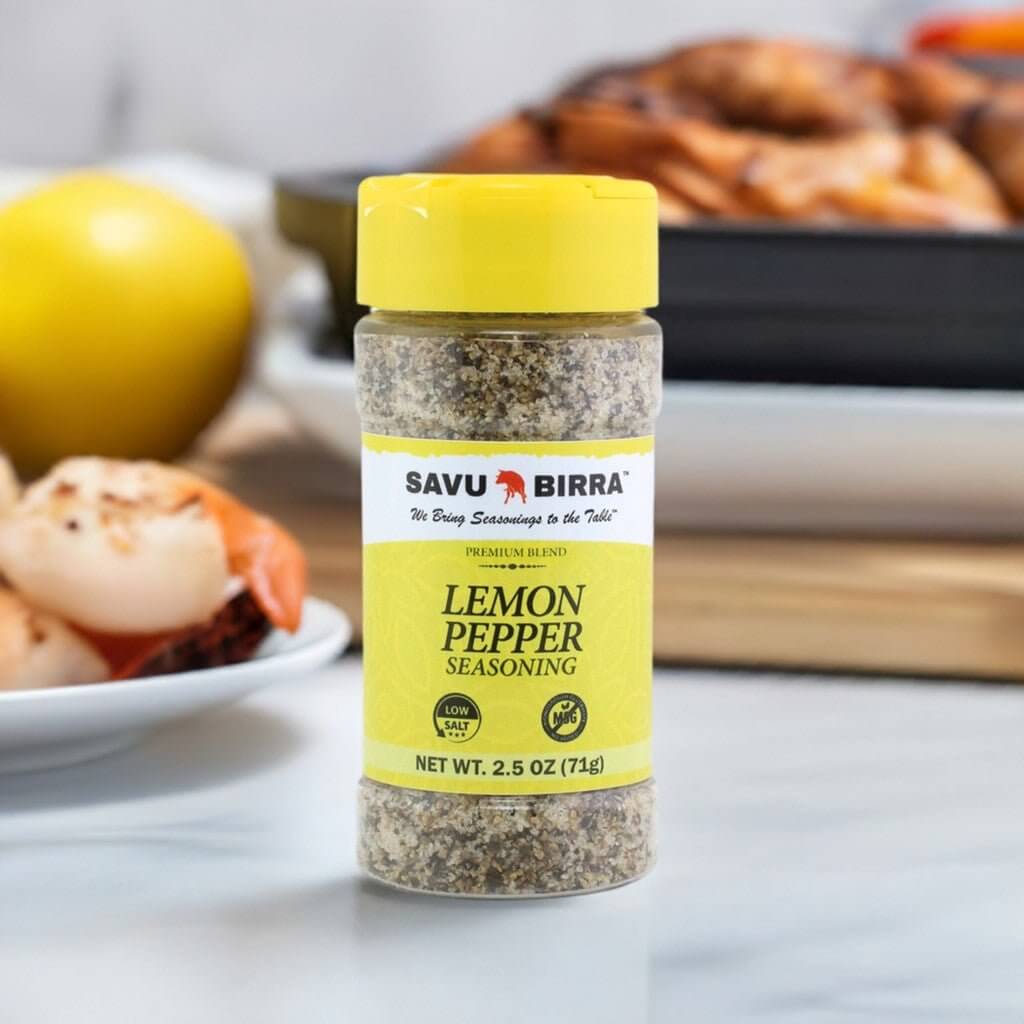
Savu Birra Lemon Pepper Seasoning combines lemon peel and coarse black pepper for tangy, peppery flavor. Choose a 2.5, 6.5 or 10.0 ounce bottle for chicken, seafood, vegetables and more.
Shop Lemon Pepper Seasoning Shop Lemon Pepper Chicken Shop the Lemon 4-Pack
Start lightly and taste before adding extra salt; this blend already contains sea salt.
How much lemon pepper seasoning should you use?
For Savu Birra Lemon Pepper Seasoning, start with 1 teaspoon per pound of chicken, fish, potatoes or vegetables. For a stronger flavor, try up to 2 teaspoons next time. These are starting points, not fixed rules: the right amount depends on your taste and how much salt is already in the dish. Other brands can have different formulas.
This blend contains sea salt, citric acid, coarse black pepper, sugar and lemon peel, plus silicon dioxide to prevent caking. Skip additional salt at first, especially with salted butter, broth or cheese. Taste cooked food before adjusting; do not taste raw meat or seafood.
1. Season grilled chicken
For 1 pound of boneless chicken, coat with 1 tablespoon olive oil and 1–2 teaspoons lemon pepper seasoning before grilling. Spread the coating evenly so each bite gets some citrus and pepper. Grill over medium heat, moving the chicken away from flare-ups if the outside browns too quickly.
Use a thermometer to check that the thickest part reaches 165°F. Serve with rice and a cucumber salad for a meal that lets the seasoning stand out.
2. Roast vegetables
Toss 1 pound of broccoli, cauliflower, carrots or zucchini with 1–2 tablespoons olive oil and 1 teaspoon seasoning. Spread on a sheet pan in one layer and roast at 425°F until tender with browned edges, turning once. Begin checking softer vegetables around 15 minutes; denser vegetables may need 25–35 minutes.
Cut vegetables into similar sizes, and give them space on the pan. If mixing quick-cooking zucchini with carrots, add the zucchini later so both finish at about the same time. See the roasted vegetable recipe below for a simple combination.
3. Flavor seafood
For 1 pound of fish or peeled shrimp, start with 1 tablespoon olive oil and 1 teaspoon seasoning. Apply just before cooking so you can control the flavor without a long marinade. Fish fillets work well baked or pan-seared; shrimp make a quick addition to tacos or grain bowls.
Cook fish to 145°F in the thickest part. Cook shrimp and scallops until the flesh is pearly or white and opaque. Finish with fresh lemon only if you want more tartness—the seasoning already adds it.
4. Sprinkle on popcorn
For 4 cups of freshly popped, unsalted popcorn, start with ¼ teaspoon seasoning. Drizzle with 1–2 teaspoons melted unsalted butter or oil, then toss with the seasoning while warm. The light coating helps the seasoning stick instead of falling to the bottom of the bowl.
Taste and add another small pinch if needed. With microwave popcorn that is already salted, use less seasoning to start.
5. Season roast potatoes
Cut 1 pound of potatoes into roughly ¾-inch pieces. Toss with 1 tablespoon olive oil and 1 teaspoon seasoning, then roast at 425°F for about 30–40 minutes, turning halfway through. They are ready when the centers are tender and the edges are browned.
Dry the potatoes before coating and avoid crowding the pan. For extra citrus at the table, offer lemon wedges instead of adding more of the salted blend.
6. Enhance salad dressings
Whisk ¼ teaspoon seasoning into 3 tablespoons olive oil and 1 tablespoon lemon juice or vinegar. Taste before adding salt, then spoon a little over a lettuce leaf to judge the dressing as it will taste in the salad.
If it is too tart, add a little more oil; if too strong, make more of the unseasoned dressing and combine. This small batch also works over a chickpea or cucumber salad.
7. Flavor rice or quinoa
Stir ½ teaspoon seasoning and 1 teaspoon olive oil or unsalted butter into 2 cups of cooked rice or quinoa while warm. Adding it after cooking makes it easier to distribute evenly and adjust the flavor.
If the grains were cooked in salted broth, begin with ¼ teaspoon. Add chopped parsley or scallions for freshness, and pair with the chicken or fish recipes below.
8. Season roast chicken
For a 3–4 pound whole chicken, start with 1 tablespoon seasoning mixed with 1 tablespoon olive oil or softened unsalted butter. Gently loosen the skin over the breast and spread some of the mixture underneath; rub the rest over the outside before roasting.
Follow the roasting method for your bird's size and check for 165°F in the thickest breast and the innermost thigh and wing, avoiding bone. If the skin browns before the chicken is done, cover it loosely with foil. For a smaller meal, use the boneless chicken recipe below.
9. Mix into marinades
For 1 pound of chicken or drained, pressed tofu, combine 1 tablespoon olive oil with 1 teaspoon seasoning. Coat and refrigerate for 15–30 minutes before cooking. This is a simple flavor coating; you do not need extra lemon juice to get a citrus note.
For fish, season just before cooking instead. Discard marinade that has touched raw meat or seafood; set aside a separate clean portion before adding raw ingredients if you want a finishing sauce.
10. Finish soups and stews
Stir ¼ teaspoon seasoning into 2 cups of finished soup or stew, then taste before adding more. Add it near the end so you can judge the citrus and salt against the cooked broth.
Try it in chicken soup, white bean soup or a vegetable stew. When using salty stock, season one small bowl first rather than the whole pot.
Bonus: crispy lemon pepper wings
Lemon pepper wings are one of the most popular ways to use this seasoning. For 2 pounds of wings, pat them very dry and toss with 1 tablespoon oil and 1 tablespoon Lemon Pepper Chicken Seasoning or Lemon Pepper Seasoning. Bake on a rack at 425°F for 40 to 50 minutes, turning once, or air fry at 380°F for 20 to 25 minutes, shaking the basket halfway. Wings are safe at 165°F, but most cooks take them to 175°F to 185°F for tender meat and crisp skin.
For the classic "lemon pepper wet" style, toss the cooked wings in 2 tablespoons melted unsalted butter mixed with 1 teaspoon seasoning. Taste one wing before adding more, since the seasoning contains salt. For a game day spread, serve them next to wings made with Honey Garlic Chicken Wing Seasoning and Nashville Hot Meat Rub.
Three simple lemon pepper recipes
These recipes use modest starting amounts of Savu Birra Lemon Pepper Seasoning. Cooking times are approximate: ingredient size and your oven affect timing, so use the doneness checks below.
Oven-baked lemon pepper chicken
Serves: 2–3. Ingredients: 1 pound boneless, skinless chicken breasts; 1 tablespoon olive oil; 1–2 teaspoons lemon pepper seasoning.
- Heat the oven to 400°F. Pat the chicken dry and gently pound thick portions to a similar thickness for more even cooking.
- Coat with olive oil and seasoning. Place in a baking dish with space between the pieces.
- Bake, beginning to check around 20 minutes. Continue cooking until a thermometer reads 165°F in the thickest part; larger pieces may take longer.
- Let rest for a few minutes before slicing. Serve with seasoned rice and roasted vegetables.
Baked lemon pepper fish
Serves: 2–3. Ingredients: 1 pound salmon or cod fillets; 1 tablespoon olive oil; 1–2 teaspoons lemon pepper seasoning; optional lemon wedges.
- Heat the oven to 400°F. Pat the fish dry and place in a lightly oiled baking dish.
- Brush with olive oil and sprinkle evenly with seasoning.
- Bake, beginning to check around 10 minutes. Continue until the thickest part reaches 145°F. Thick fillets need longer than thin ones.
- Serve with quinoa or a green salad. Taste before adding an optional squeeze of lemon.
Lemon pepper roasted broccoli and carrots
Serves: 2–3 as a side. Ingredients: ½ pound broccoli florets; ½ pound carrots, cut into thin, similar-sized pieces; 1½ tablespoons olive oil; 1 teaspoon lemon pepper seasoning.
- Heat the oven to 425°F. Toss the vegetables with oil and seasoning.
- Spread in a single layer on a sheet pan. Use a second pan if needed to avoid crowding.
- Roast for about 20–30 minutes, turning halfway through, until the carrots are tender and the broccoli edges are browned. Remove any pieces that finish early.
- Taste after roasting. If you want more citrus without extra salt, add a squeeze of fresh lemon.
Common questions about lemon pepper seasoning
Should you add lemon pepper before or after cooking?
Add it before cooking when you want an even coating on chicken, fish or vegetables. Stir it in after cooking for rice, popcorn, soup and dressings, where tasting and adjusting is easy. A small finishing pinch can brighten a cooked dish, but remember that it adds salt too.
Is lemon pepper spicy?
Savu Birra Lemon Pepper Seasoning gets its peppery bite from coarse black pepper. It does not list a chile pepper among its ingredients. Start lightly if you are sensitive to pepper; the citrus tartness and pepper bite are different sensations.
Is Lemon Pepper Chicken Seasoning the same blend?
No. Savu Birra Lemon Pepper Chicken Seasoning is a separate product formulated for poultry. Its ingredient list includes spices in addition to black pepper, citric acid, sea salt, sugar and lemon peel. The regular Lemon Pepper Seasoning is the versatile option used throughout this article; it also works on chicken. Both contain salt, so begin lightly and check the label when switching blends.
What if the dish tastes too salty or too tart?
Add more unseasoned food where practical: extra rice, vegetables or unsalted broth can spread the seasoning through a larger portion. For a dressing, add more oil. Next time, use less blend at the start and build up after tasting cooked food.
How long does lemon pepper seasoning last?
Kept sealed and away from heat, light and steam, it tastes best within about a year. The lemon notes fade before the pepper does, so if it smells mostly of pepper, it is time for a fresh bottle. See our guide to the shelf life of spices.
Cooking temperature reference: FoodSafety.gov safe minimum internal temperatures. Use a food thermometer for chicken and fish; cooking time alone does not confirm doneness.
Choose your lemon seasoning
Start with Lemon Pepper Seasoning for the citrus and pepper flavor in these ideas. For a different flavor, choose:
- Lemon Garlic — savory garlic with citrus for chicken, seafood and roasted vegetables.
- Lemon Herb — lemon with basil, oregano and thyme for vegetables, seafood, sauces and dressings.
- Lemon Aleppo — tangy, fruity chile flavor with mild background heat for meat and seafood.
Want to try all four? The Lemon Seasoning Variety Pack (4 Pack) includes Lemon Pepper, Lemon Garlic, Lemon Herb and Lemon Aleppo. Or browse the complete lemon seasoning collection.
Explore more from Savu Birra
Related reading: 5 Ways to Use Lemon Aleppo Seasoning, Lemon Seasoning Blends for Chicken, Pork, Seafood and Vegetables and the chicken seasoning guide.